
Society of Antiquaries of London, 23rd July to 19th September
Even if Sellar and Yeatman didn’t consider it a memorable date, most people do remember that Magna Carta was signed in 1215.
Well, yes and no. In that first form, it was indeed forced on King John by the barons at Runnymede on 15th June 1215. It was intended to be a peace treaty between them.
That did not work, but an expanded and amended version was reissued in 1217 by the Regency for the young King Henry III. The Forest Charter, dealing with rights for ‘free men’ rather than just the barons, was added to it. In the story of democracy, the Forest Charter is arguably more important.
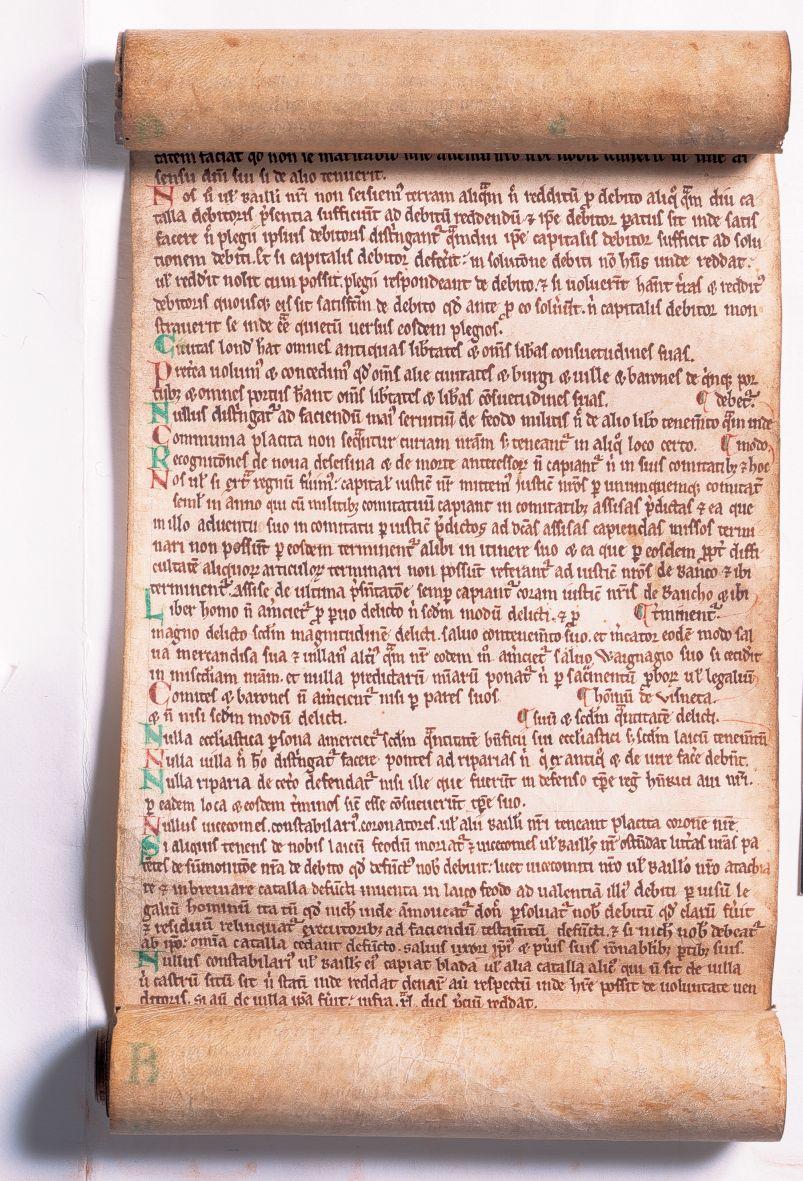
These agreements were then reissued in 1225, of the king’s ‘spontaneous and free will’ and with the full authority of his great seal. That is the 800th anniversary celebrated by this exhibition.
As a learned body second only to the Royal Society, the Antiquaries, founded in 1707 and granted its own Royal Charter in 1751, strives for ‘the encouragement, advancement and furtherance of the study and knowledge of antiquities and history of this and other countries’.
The tenure of its handsome premises in the courtyard of Burlington House, Piccadilly, recently under threat from the Treasury, has now been safeguarded.
The exhibition, which is free, is an admirable opportunity for a wider public to discover a very special place. From its beginnings, the Society has attracted extraordinary donations, including three 13th-century copies of the Charter – one a 1225 reissue. Much of the exhibition is drawn from its own collections.
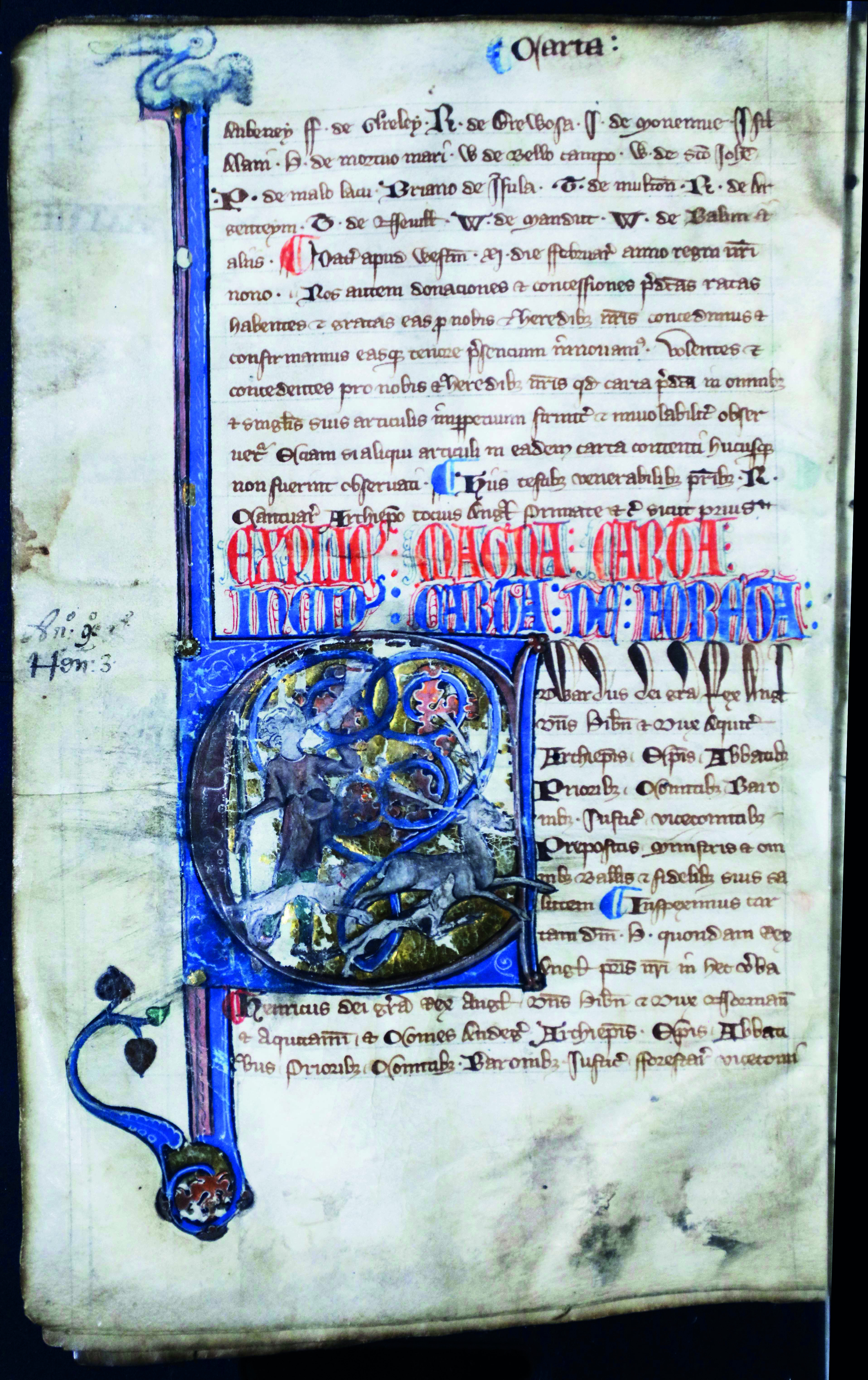
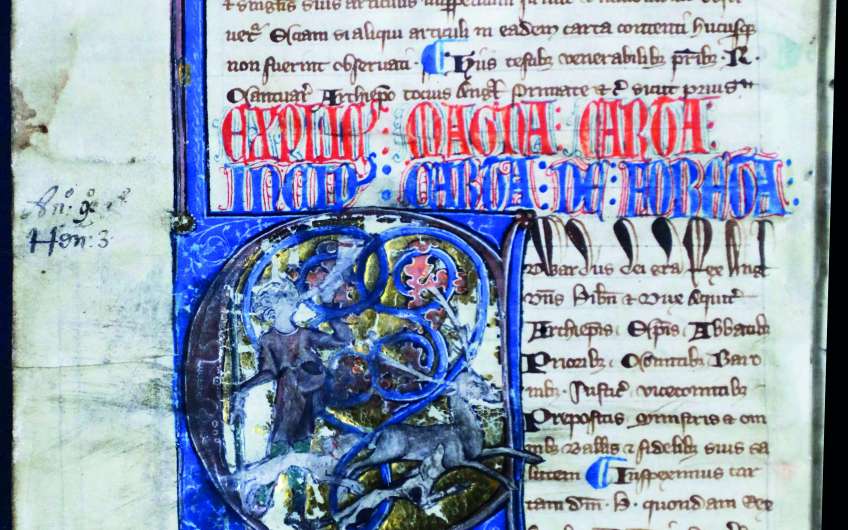
Another such donation is the Lindsey Psalter, an illuminated prayer book owned by the Abbot of Peterborough from 1214 to 1222, and bequeathed to the Society by the Bishop of Carlisle in 1768. Also beautifully illuminated is a 14th-century copy of the two 1225 charters.
The political importance of Magna Carta faded over time until it was revived by Thomas More, who cited it in his defence during his trial in 1535. Its influence on later political thinkers, including America’s Founding Fathers, is unequalled. Henry III is even more important to the story than wicked King John. The show includes a drawing of Henry III’s tomb in Westminster Abbey, probably made by William Blake as an apprentice.
The exhibition charts the Great Charter’s fluctuating history, and brings it up to date with the rap album Magna Carta Holy Grail by Jay-Z.