There's been a countrywide campaign to keep local railway ticket offices staffed by human personnel - after the government recommended widespread automation.
The online petition to retain ticket staff is open until 18th October 2023. If it attracts 100,000 signatures, the matter will be debated in parliament. *(The petition did in fact obtain 106,156 signatures).
Ticket offices with real staff are cherished by oldies, especially if rail journeys are complicated. At Walmer, near Deal, the ticket office is such a model of perfection that it has entered into local legend, along with the lady who runs it, Debbie Brooker.
Debbie, maternal but glamorous, has been running the Walmer ticket office for 34 years. She cleans it, decorates it with flowers and plants, and maintains a small collection of free books and puzzles for travellers.
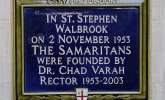
There’s also an American flag in one corner of the ticket area, along with a display of poppy wreaths, to remember four American servicemen who were killed by an explosion at Walmer station in 1945. Their names are listed on a memorial plaque on the station’s outside wall.
Debbie knows everything there is to know about train schedules, best-value fares, refunds and every imaginable travel query. I’ve been told Debbie can provide train information within two minutes, whereas it might take half an hour to figure out over the internet.
Yes, she agrees that a human presence is generally more appreciated by older people, but it’s not unknown for younger folk to have queries about travel plans and price. And human contact adds welcome, safety and friendly conversation, as well as being helpful to anyone with disabilities or sight impairment. Removing the staff at railway ticket offices has been compared to the disastrous Beeching cuts of the 1960s. Hopefully, some will be saved from the axe.
It was unsettling to learn that Nigel Farage had been de-banked and suffered from a breach of confidentiality when Coutts informed the BBC of the measure. Banking needs cofidentiality!
When my brother James worked in a bank near the Irish border that separates North from South, he noticed that the Protestant farmers kept their money in the Catholic bank – then called the Hibernian – and the Catholic farmers kept their revenues in the Protestant bank, then called the Ulster Bank.
Customers believed this ensured more confidentiality, even secrecy: their financial details would be kept from the prying eyes of their own community. Letting slip phrases such as ‘You might be surprised how much old O’Reilly has on deposit’ over a neighbourly pint would be less probable in the circumstances.
The arrangement could even foster some good relationships, as the respective bankers sought to be courteous towards their clients from the other community. The Protestant/Unionist bank flew the Irish tricolour on St Patrick’s Day, and the Catholic/Nationalist bank flew the Ulster Red Hand on occasions – to curry favour with their customer base.
Irish banks are no longer divided along such sectarian lines: they’re big conglomerates, dealing with all transactions impersonally.
I love buses, as well as trains. My idea of a holiday treat is to take bus rides around Paris; as I duly did this summer. The Paris bus system is brilliant because every bus is clearly marked with its exact route and destination.
There's an invaluable blue guide, in booklet form, called Paris Bus, which outlines the trajectory of every Parisian bus line, and its interconnections with the Métro and tramlines. Acquire it, and you’ll never need another taxi.
The delightful 39 goes from the Gare du Nord across some of the most scenic parts of the capital – the Palais-Royal, St-Germain-des-Prés, Montparnasse. The lovely 82 travels from Neuilly, through the grands boulevards, across the Seine to the Eiffel Tower and on to the Luxembourg Gardens. The charming 52 travels from the Opéra, across the Étoile, and east towards the Bois de Boulogne.
There are 119 lines to choose from. All you need is a cheap day ticket and you can sit like a Proustian duchess touring all around the City of Light.
The much-mourned Sir Michael Parkinson was recruited as a young man to the Guardian features department by my late husband, Richard West, although circumstances weren't entirely edifying. Dick got Parky to fill in for him after a night on the tiles hobbled him with an almighty hangover.
They became buddies and met on various assignments. At the annual Labour Party conference, Parky would suggest, ‘Let’s sit in the front row, so we can see Caroline Benn’s legs.’ Mrs Benn, wife of the renowned Tony, was an American with a pair of shapely pins.
They were the days when a chap could admire a lady’s limbs without it being described as a ‘micro-aggression’, or an outrageous example of patriarchal oppression.
Sometimes the lady even appreciated the compliment!
The Oldie October 2023
Enjoy The Oldie every month. Subscribe to The Oldie.