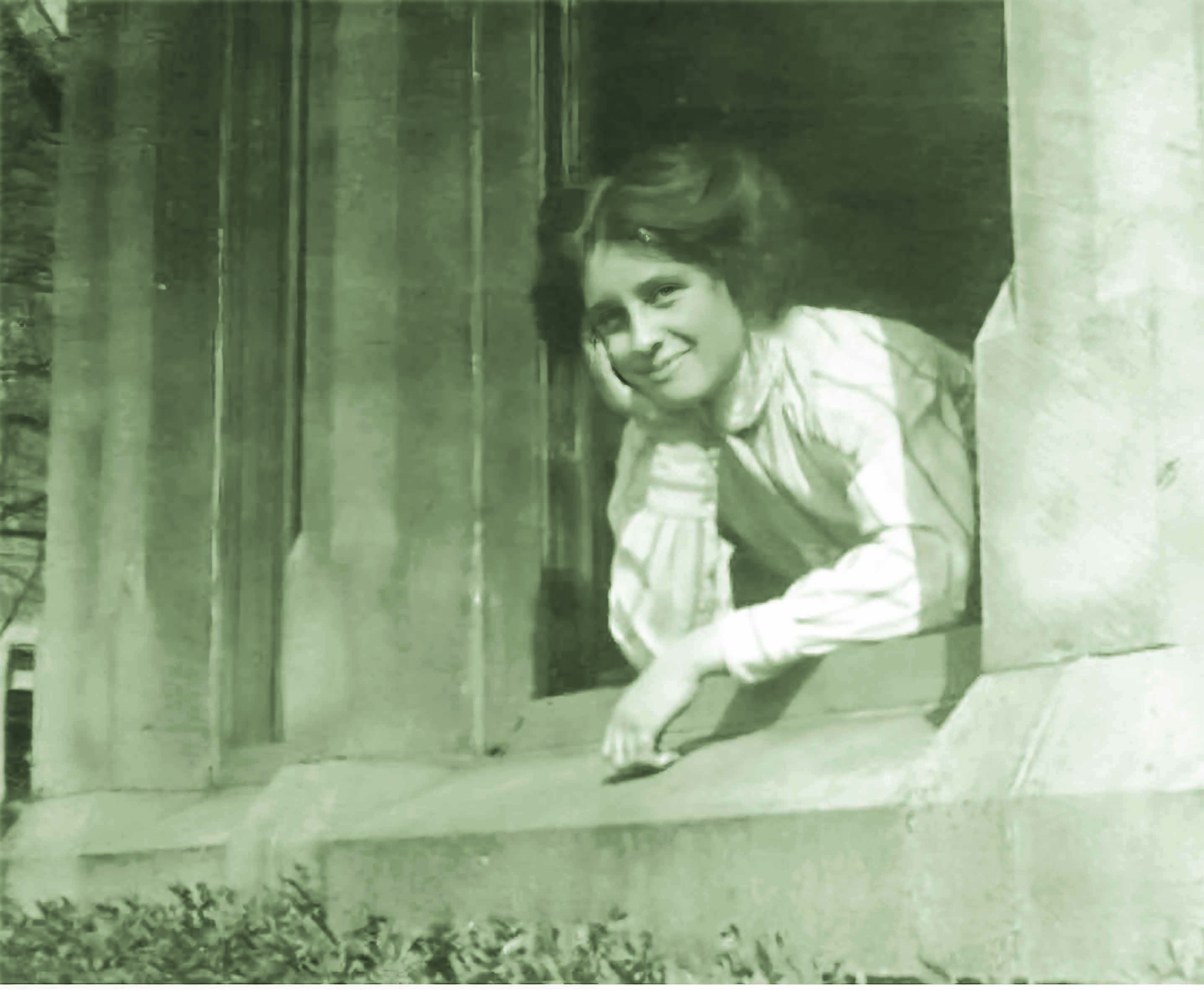

Ask anyone in Buxton who the town’s most significant resident is.
A few will know that Vera Brittain lived in the once-booming spa resort from 1905 to 1915. And they usually know just one thing about her.
Not that she was a feminist pioneer, an acclaimed chronicler of her age or a controversial peace campaigner. Or that she has admirers around the world, that her bestselling First World War memoir, Testament of Youth (1933), has been translated into seven languages, made into a popular film and an award-winning BBC drama series, and is on the school curriculum.
What they know is that she hated Buxton. That’s it. And, over a hundred years since she left the town, that’s where its interest in Vera Brittain has stopped.
There’s no public commemoration; just a plaque on the gatepost of her former home, and a photograph montage in ... not the museum, the town hall or Pavilion Gardens but the Buxton branch of Wetherspoons. Individual admirers paid for both.
Other places do celebrate Vera Brittain. Hamburg and Berlin have streets named after her, to acknowledge her high-profile campaigns against the mass bombing of German cities. English Heritage plaques adorn the London houses where she lived. A statue in her birthplace, Newcastle-under-Lyme, commemorates her 18-month residence.
Vera certainly didn’t celebrate Buxton, proclaiming in Testament of Youth that she ‘hated’ and ‘detested’ the narrow-minded, stifling town. Her remorseless criticism was a recurring theme in her journalism and two autobiographical novels.
But Vera’s portrayal of her early life was one-sided, unjustified and not always truthful.
Created, owned and controlled by the Dukes of Devonshire, the booming ‘estate resort’ of Buxton gave aspirational families such as Vera’s a more privileged lifestyle and sense of social superiority than they would have had elsewhere.
Today, it’s hard to imagine just how lively, elegant and socially exclusive Edwardian Buxton was.
Vera’s cosseted life in Buxton laid the foundations for her later success. An enlightened education, some inspiring Buxton figures and University of Oxford lectures at the town hall inspired her enthusiasms and ideas. In place of obdurate parents and censorious provincial ‘matrons’, Vera had a great deal of support for her university ambitions.
Most productively of all, Vera’s early life inspired the compelling feminist narrative in her memoir of fighting a ‘battle royal’ to escape from an oppressive Edwardian town for university and a more meaningful life.
This was already a popular theme in a burgeoning market for middle-class women’s novels, including those written by Vera and her contemporaries.
My Testament of Lost Youth shows just how much of herself she lost in the First World War. It’s also a testament to the vibrant heyday of a unique town that never recovered after 1918.
Over a century after Vera Brittain left Buxton, the town’s neglect of its most important resident now extends to some of the beautiful landmark buildings she knew.
Millions of pounds of public money contributed to the restoration of the Devonshires’ magnificent Georgian crescent as a high-class spa hotel. Just three years after opening, it is up for sale.
More public funding enabled the University of Derby to convert the stunning Devonshire Royal Hospital into its Buxton campus. Opened to great fanfare by the then Prince of Wales, this wonderful
building, with the largest unsupported dome in Europe, was where Vera began serving as a voluntary nurse in 1915.
Until it closed in 2000, the Devonshire was Britain’s last hydropathic hospital. Four years before the end of the 25-year term for which grants were given, the university has declared the Devonshire Dome surplus to requirements. There is no plan for its future.
Also on the market is the splendid town hall, where Vera attended Oxford’s ‘extension’ lectures in social history, sparking her ambition to study at Somerville.
Down the hill from the War Memorial, where her brother Edward’s name is inscribed, is the Old Hall Hotel. Once the gilded prison in which Mary, Queen of Scots was confined by Elizabeth I, it is also up for sale.
And, in a supreme irony for a story about selling off a town’s history, ‘For Sale’ boards adorn Buxton’s award- winning museum. For decades, it was housed in a once-luxurious Victorian hydro where Vera enjoyed one of Buxton’s many society balls.
There is a resounding public silence about all this from the Conservative-run county council and Labour-run borough council.
While financial problems beset both councils, more taxpayer millions are earmarked for regenerating Buxton’s characterless 1980s shopping precinct.
Vera Brittain having been neglected for far too long, neglect now threatens Buxton’s wonderful built heritage.
Testament of Lost Youth: The Early Life and Loves of Vera Brittain by Kathryn Ecclestone is out now