

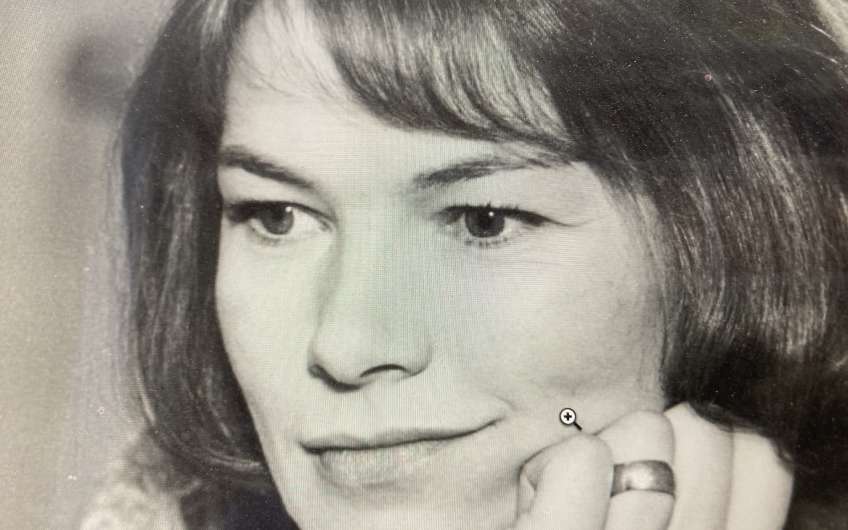

When the late great actress made her return to the stage as King Lear in 2016, our theatre critic Paul Bailey was overwhelmed by her brilliance
In November 2016, Glenda Jackson returned to her natural home, the theatre, after an absence of 25 years to play King Lear at the Old Vic.
Within minutes of the production opening, it became clear that she had lost none of her inimitable power to take control of a stage. She had the commanding presence that is necessary for great classical acting as well as an ear for the beauty and diversity of Shakespeare’s poetry, which she spoke as if the words were just coming to her, ready to be expressed. Her voice encompassed an astonishing range for a woman so small in stature. It was good to have her back.
She was born in Birkenhead in 1936. Her father was a builder, while her mother took cleaning jobs and occasional work as a shop assistant. She was educated at the West Kirby County Grammar School for Girls, where she discovered her gift for acting. She worked for two years in a local branch of Boots before receiving a scholarship to study at Rada (the Royal Academy of Dramatic Art) in 1954.
On leaving drama school, she acted in repertory companies throughout Britain for six years. In 1964, she joined the Royal Shakespeare Company to take part in Peter Brook’s now-legendary ‘Theatre of Cruelty’ season.
In Peter Weiss’s Marat/Sade, she played an inmate of an asylum for the insane, who imagines herself to be Charlotte Corday, the girl from Caen who murdered the eminent physician and radical thinker Jean-Paul Marat, a major figure in the French Revolution, in his bath. (It is said that they talked politely to each other for several minutes before Corday produced a kitchen knife from her skirt and stabbed him in the chest.) Jackson’s electrifying performance of this demanding role has been preserved on film. I find it hard to think now of anyone else who could have played it with such conviction.
Hers was an unconventional talent from the very start. If there was a charm school in the Wirral, the young Glenda Jackson was not considered promising enough to be admitted to it. The abusive term ‘luvvie’ could never be applied to her. Indeed, I remember a director in the 1970s, when her career was blossoming, describing her as a ‘thorn without a rose’.
She was too intelligent to enjoy being labelled ‘feminine’ and ‘womanly’, though of course she was both. She revelled as an actress in the unexpected. I wish I had seen her Ophelia in Peter Hall’s production of Hamlet starring David Warner. Friends tell me that she registered an entirely credible impatience with the prince’s meanderings and convoluted jokes before going mad. The average Ophelia is a simpering victim, but that’s not the way Jackson saw her. She looked at everything she undertakes with a fresh eye, as if the text was that of a brand-new play rather than an all-too-familiar old theatrical warhorse.
It was in the television series Elizabeth R that the general public became aware of Jackson’s formidable strengths. She was Elizabeth I in every telling detail – imperious, witty, sarcastic, vulnerable, kind, cruel, forgiving and vengeful. A great human being, in short. Jackson had her hair shaved off during rehearsals, in the interests of authenticity. She delivered the speech at Tilbury as a cri de coeur from a strong but anguished soul. In the closing scenes of the final episode, she achieved a heartbreaking grandeur, as she did a short while ago as another monarch facing extinction.
She has been the recipient of Oscars, Golden Globes, Bafta awards and Emmys, but she has always seemed to me slightly out of place on the big screen. Heresy, perhaps, but I find her comic acting less persuasive than, say, Carole Lombard’s or Katharine Hepburn’s. Having said that, I recall her Cleopatra in Ernie Wise’s updating of Shakespeare: ‘All men are fools and what makes them so is having beauty like what I have got’, she pronounced with her customary authority, to hilarious effect.
In 1992 she announced that she was abandoning acting for a career in politics. She won the London seat of Hampstead and Highgate for Labour. She was a shadow minister for transport and then under-secretary of state in Tony Blair’s government. She was a respected constituency MP, but became disillusioned with Blair’s increasing egoism. He was one of three notable targets for her scorn – the others being Margaret Thatcher and the ‘quiet man’, Iain Duncan Smith.
She left Parliament in 2015, a few days before her 79th birthday. As King Lear, she was back where she really belongs. She still didn't indulge in charm, but what she did have was something far more precious: grace. She may have been abrasive but she was gracious. There was absolutely no danger of her ever becoming one of that dread species known as ‘national treasure’. Oh, it was so good, so very good, to have her back.


