
EXHIBITIONS
HUON MALLALIEU
TURNER & CONSTABLE: RIVALS & ORIGINALS
Tate Britain, until 12th April
As Tennyson’s Ulysses observed, ‘The sea moans round with many voices,’ and indeed it is rarely – if ever – completely silent.
The Turner & Constable show at the Tate provides plenty of Turners with the sounds of the sea. My new book, The Ear of the Beholder, shows how artists – from Hieronymus Bosch with his Garden of Earthly Delights to Munch with his Scream – have deliberately suggested sounds to manipulate the ways we react to their paintings.
Even when the subject is flat calm, Turner gives us sound. In Sun Rising through Vapour (1807) (pictured), it is a still time shortly after dawn. There is hardly a breath of wind and the fishermen, unloading, sorting, selling the fresh catch, seem to speak softly. And there are gulls, of course, intent on their pickings.
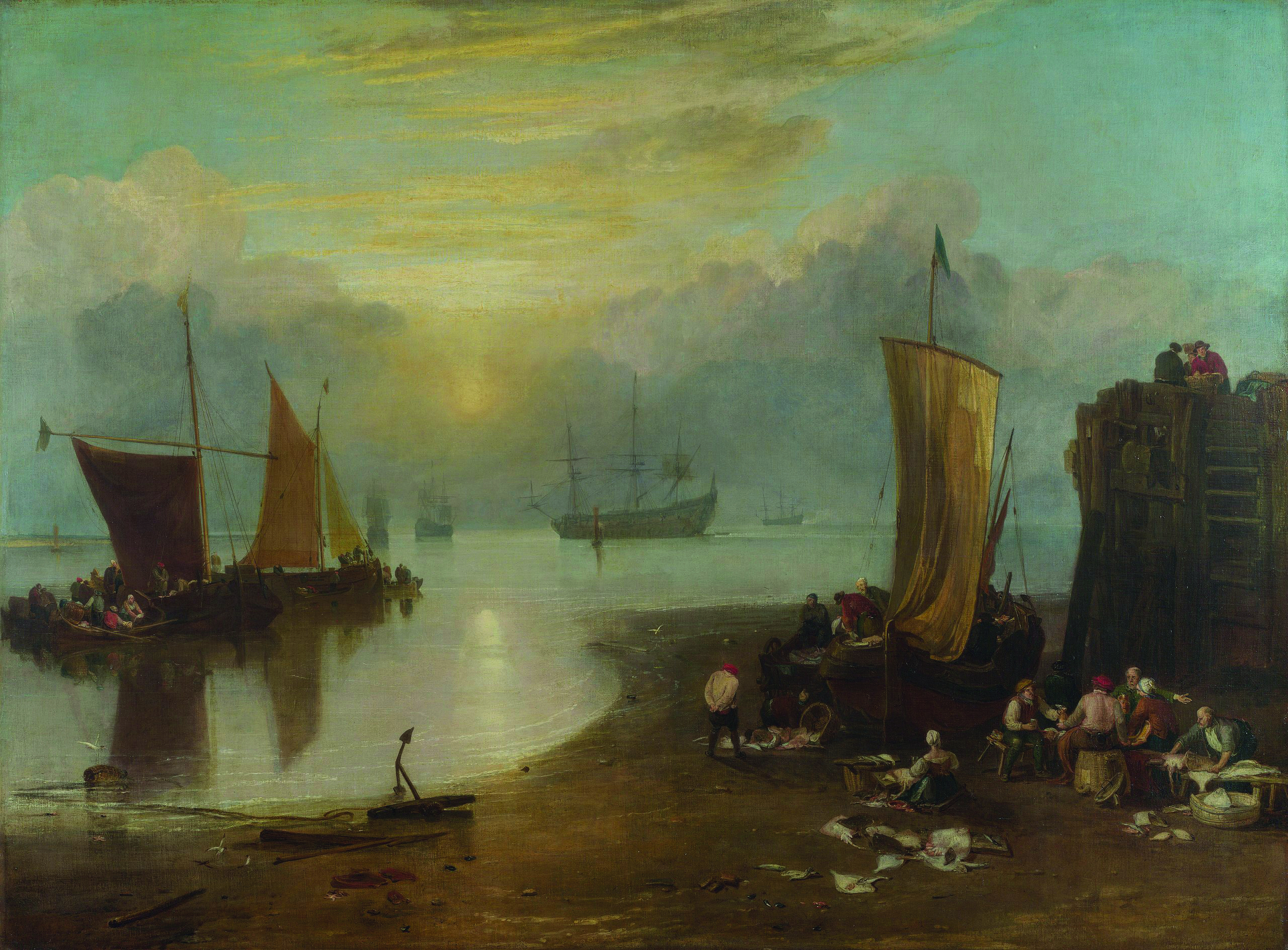
Almost unnoticed across the calm, from the most distant ship comes the reverberation of a morning gun, and always there is the gentle sough of ripples on the shore. Listening to this brings a tingle to the spine.
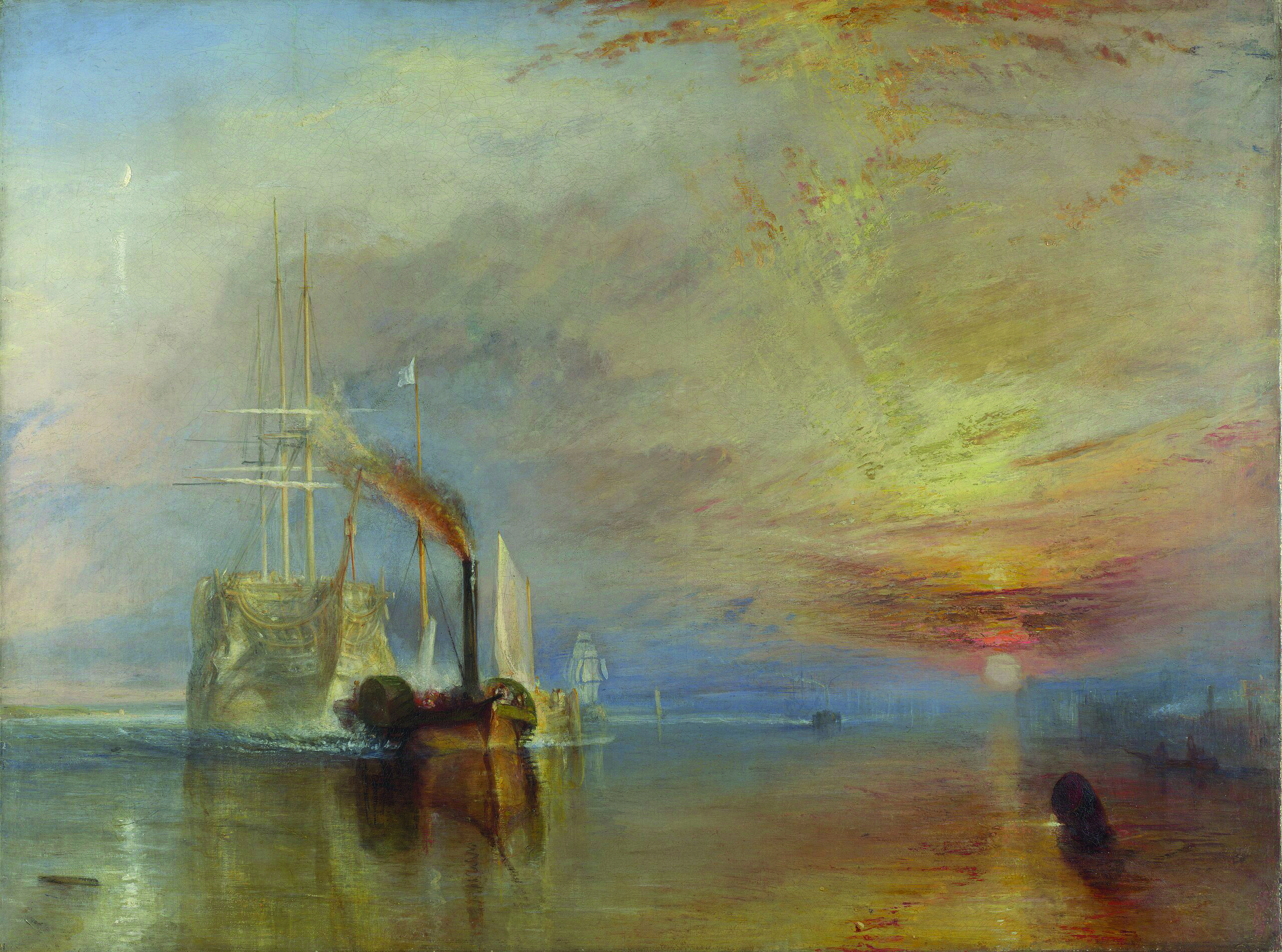
Turner’s best-loved painting is The Fighting Temeraire Tugged to Her Last Berth to Be Broken Up (1838), pictured, which is quiet and melancholy, but far from silent. This is the moment towards sunset when wind dies away and sounds from far across the water are amplified.
It is important that we hear the beat of the tug’s engine, the splash of its paddles and the gentler shush shush of the wash. These help to heighten the melancholy message of transience, of fading glory as the age of sail passes, and the inevitability of a more prosaic, steam-powered future.
In the background, there is a faint murmur from the riverside town, and far away the cries of marsh birds.
It seems to me the port wheel has been stopped, so as to swing Temeraire broadside to the shore. So it is only the starboard paddler nearer to us that we hear.
Could some such manoeuvre explain the niggling criticism sometimes made that, by artistic licence, Turner has painted the scene the wrong way round, sending the stately Trafalgar warrior out to sea, rather than upriver to the Rotherhithe breakers?
Huon Mallalieu’s The Ear of the Beholder is out now