
As we start another year, we oldies could do worse than to read Jonathan Swift’s ‘Resolutions When I Come to Be Old’, penned when he was 30, in 1699:
‘Not to tell the same story over and over to the same People … Not to be too free of advise [sic] … Not to talk much nor of myself’.
And it is probably tactless of a positively ancient columnist to remind his fellow oldies of the struldbrugs.
These are the people, encountered in Jonathan Swift’s Gulliver’s Travels, who are immortal. ‘The least miserable among them appear to be those who turn to Dotage, and entirely lose their Memories; these meet with more Pity and Assistance, because they want many bad Qualities which abound in others.’
Swift (1667-1745) is a writer without any mercy. The descriptions of the struldbugs over the age of 90, who have lost their hair and teeth, whose aged bodies have collapsed, who can never get to the end of a sentence and who are rancid with ill temper and self-pity are an instantly recognisable breed.
The struldbrugs live on the island of Luggnagg. Lemuel Gulliver finds them on his immortal travels, published 300 years ago in 1726. It is a book to which any sane person returns again and again.
Probably, the first few times we read it, we do so with mixtures of amusement and disgust. The more often we read it, however, the closer it seems, like all great satire, to being a mirror. How often, when we read or hear contemporary scientists congratulating themselves on the latest discovery, do we recall the grand academy of Lagado on the island of Laputa. ‘He had been Eight Years upon a Project of extracting Sun-beams out of Cucumbers.’
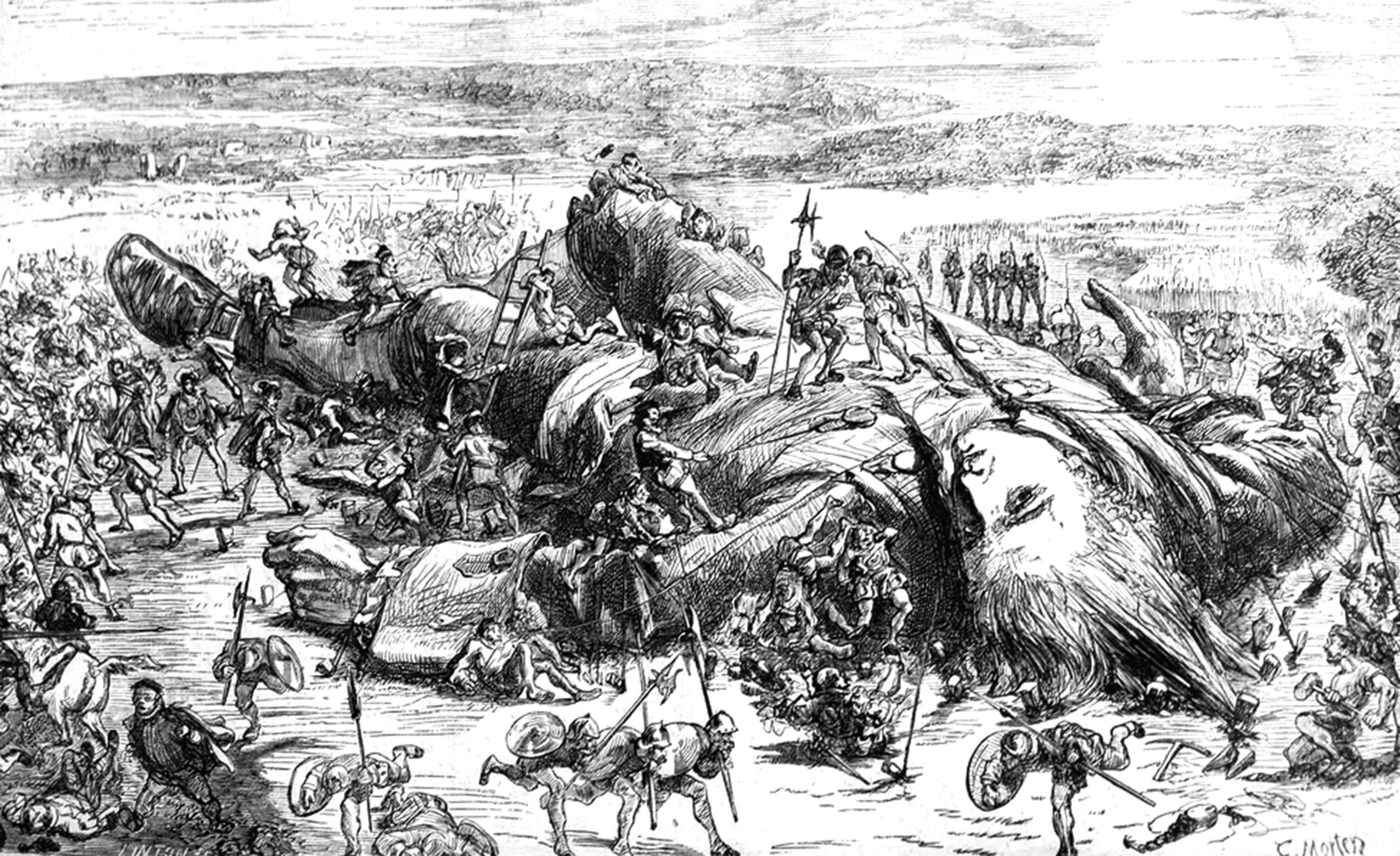
How often, when listening to disputes, in church, academy or parliament, have we been irresistibly reminded of the very beginning of the Travels, when Gulliver goes to the island of tiny people, Lilliput. He finds that there is a war going on between those who crack open their boiled eggs at the large end and those who do so at the smaller end. ‘Many Hundred large Volumes have been published upon this Controversy.’
In the Fourth Book of the Travels, when Gulliver visits the land of the Houyhnhnms, we reach the book’s core.
The Houyhnhnms (the word onomatopoeically echoing the whinnying of the horse) are an equine species guided entirely by reason. They are clean, rational, pitiless. They respect Nature.
They provide the greatest possible contrast with the other species in the island, the Yahoos. And when the horse-like Houyhnhnms meet Gulliver, they recognise him as a Yahoo.
Coarse, stupid, destructive, smelling of shit, the Yahoos are us. They are pointlessly violent. They are horribly recognisable. When Gulliver comes home to England, he cannot bear the company of human beings. It is a long time before he can bear the company even of his wife, preferring to haunt the stables.
Jonathan Swift died just short of his 80th birthday, in his Deanery at St Patrick’s Cathedral in Dublin, a post he occupied for 30 years. He had for some years been mad. The gravestone of this magnificent writer reads that he had gone to where fierce indignation could no longer lacerate his heart. ‘Ubi saeva indignatio ulterius cor lacerare nequit.’
The ‘traveller’ who reads the epitaph is bidden to go and imitate, if possible, ‘this vigorous champion of liberty’.
I suppose any writer coming away from that grave feels sheepish that they are not able to take the Dean’s savagery and cynicism far enough, in either their championing of human freedom or their denunciation of humbug and cant.
Among my near-contemporaries, Auberon Waugh tried his best. The Diaries he wrote in Private Eye are the most Swiftian prose I’ve read in my lifetime. It is impossible to imagine any editor nowadays daring, or being allowed, to print them. We have shrunk into timidity.
The most Auberon Waughish of all Swift’s satires was his Modest Proposal, in which he pointed out the poverty of the majority, and the distressing tendency of Irish Roman Catholics to produce large families. What could be simpler than to suggest the cure for hunger was to eat Irish babies?
Graham Linehan is the living Irishman who probably comes closest to Dean Swift in spirit. His Father Ted was a tremendous invention. There must be many wistful Irish people who, to this day, do not know whether the Father Ted programmes were a symptom of the diminishing power of the Roman Church in the Emerald Isle, or its prime cause.
Now Graham Linehan has entered the territory (which would surely have been grist to Swift’s mill) of transgender politics, with the results we all recognise, and he has been sent to live in exile.
Of course Linehan, like Waugh and the Dean, goes ‘too far’. Too Far is the no man’s land where truth might – just might – be found.
Whatever our ‘views’ on things – and Swift often reminds us of the absurdity of entertaining ‘views’ – satirists such as Linehan and Waugh are in the Swiftian tradition of defending liberty; chiefly the right to be offensive.